Beyond Rest: How Craniosacral Therapy and Massage Support Concussion Recovery in Calgary
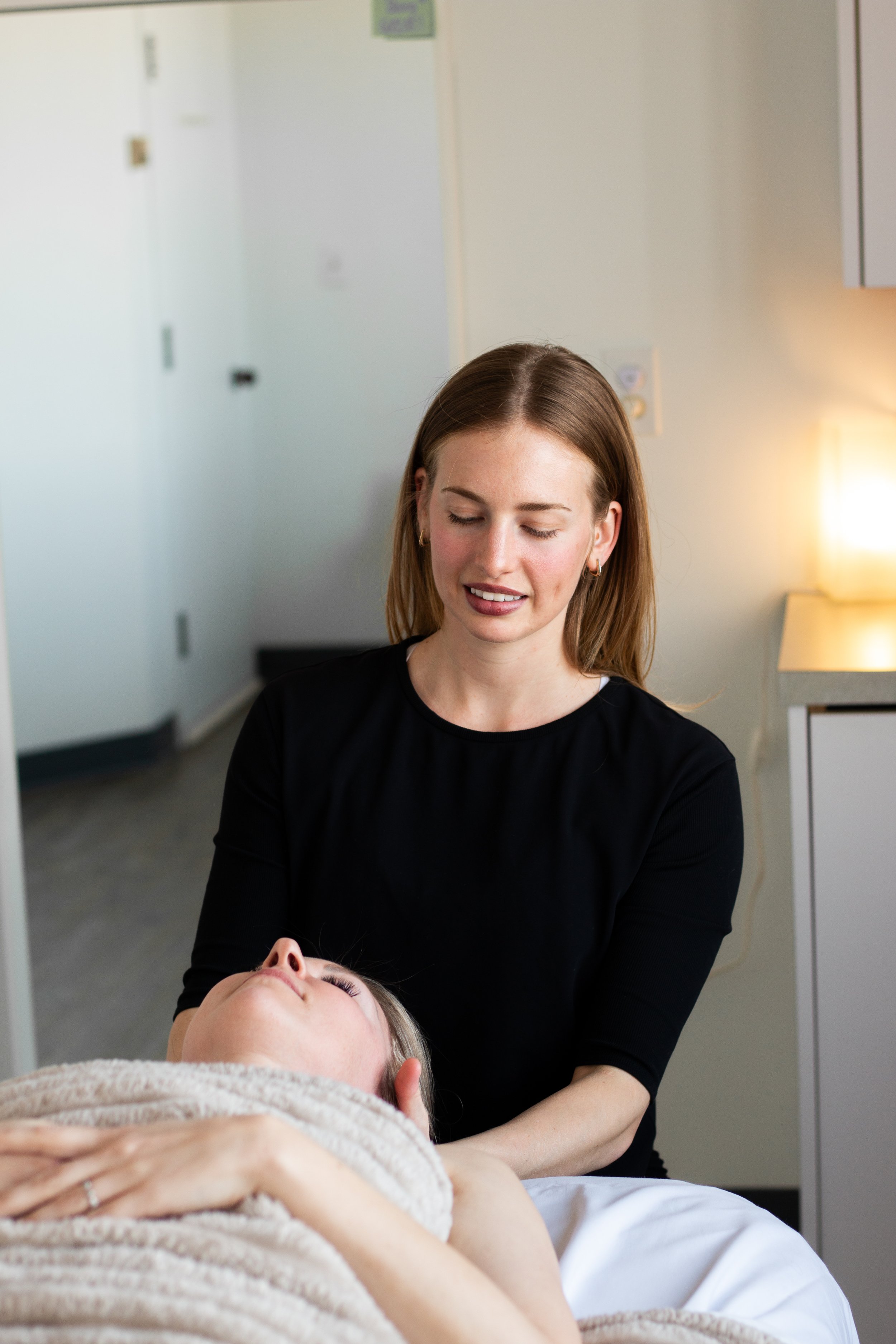
Rest is where most concussion advice in Calgary ends. For the 15–30% of patients whose symptoms linger beyond 10 days, that's not good enough.
Headaches. Brain fog. Dizziness. Light sensitivity. Neck pain. These aren't signs of weakness — they're signs that your nervous system and cervical spine need hands-on support, not just time.
At our Calgary practice, we see this gap every day. Evidence-informed concussion therapy combining craniosacral therapy and massage therapy offers a gentle, effective path forward — and this article explains why.
What Actually Happens After a Concussion
A concussion triggers a neurometabolic cascade — a surge of chemical changes in the brain that disrupts normal function. Three systems take the hardest hit:
The brain's waste-clearing system (glymphatic) slows down
Blood flow becomes irregular
The autonomic nervous system (ANS) — which governs heart rate, digestion, and stress response — goes off balance
The Cervical Connection
The neck is almost always involved. Tension in the suboccipital muscles at the base of the skull can compress cranial nerves, restrict cerebrospinal fluid (CSF) flow, and directly cause headaches after concussion, dizziness, and visual changes.
Autonomic Dysregulation
Many patients get stuck in fight-or-flight mode. Their nervous system can't shift into rest-and-repair — which is precisely what recovery requires. This drives the fatigue, anxiety, sensory sensitivity, and brain fog of post-concussion syndrome.
Why Symptoms Don't Just Resolve With Rest
Rest helps the brain's acute chemistry stabilize — but it doesn't:
Release mechanical tension in the cervical spine
Retrain the autonomic nervous system
Address the compensatory postures patients develop after injury
Without targeted care, these patterns become entrenched. Common persistent symptoms of post-concussion syndrome include:
Headaches (tension-type, cervicogenic, or migraine-like)
Brain fog and poor concentration
Dizziness and balance problems
Light and noise sensitivity
Sleep disruption and fatigue
Neck pain and stiffness
Mood changes and anxiety
How Craniosacral Therapy Supports Nervous System Recovery
Craniosacral therapy (CST) uses extremely light touch — about 5 grams of pressure, the weight of a nickel — to release restrictions in the membranes and fluid surrounding the brain and spinal cord.
For concussion recovery, CST is uniquely suited because it's gentle enough to use even in sensitive, symptomatic patients.
Key Benefits for Concussion Patients
Nervous system regulation: Helps shift from sympathetic overdrive (fight-or-flight) into parasympathetic recovery (rest-and-repair)
CSF flow: Supports cerebrospinal fluid circulation, aiding the brain's natural recovery and waste-clearing
Cranial decompression: Gently releases restrictions that contribute to headaches and sensory sensitivity
Vagus nerve support: Improves vagal tone for better emotional regulation and ANS balance
Reduced reactivity: Over time, the nervous system becomes less sensitive to light, sound, and stimulation
When seeking craniosacral therapy for concussion in Calgary, work with a therapist who understands post-concussion pacing — sessions should be shorter and carefully monitored.
How Massage Therapy Addresses Cervical Tension
While CST focuses on the nervous system, massage therapy for concussion in Calgary targets the musculoskeletal side — specifically the chronic tension and guarding in the neck, shoulders, and upper back.
Why the Cervical Spine Matters
Cervicogenic headaches — originating from neck dysfunction — are common after concussion and often mistaken for purely neurological symptoms. The suboccipitals, sternocleidomastoid, and scalenes are frequently hypertonic, contributing to headache, dizziness, and visual changes.
What Therapeutic Massage Delivers
Suboccipital release: Reduces cervicogenic headache directly
Postural reset: Interrupts protective guarding patterns like forward head posture
Circulation support: Improves lymphatic and vascular flow in the head and neck
Parasympathetic activation: Calms the nervous system to support healing
Pain relief: Enables fuller participation in recovery and return-to-activity
Sessions should be shorter and gentler than standard massage — especially in the first weeks. An experienced RMT will adapt the treatment to your current phase of recovery
The Power of Collaborative Concussion Care
CST and massage are most effective as part of a team approach. Gentle concussion treatment in Calgary works best when providers communicate.
Your Recovery Team May Include:
Family physician / sports medicine doctor: Diagnosis, monitoring, medical clearance
Physiotherapist (concussion-trained): Vestibular rehab, cervicogenic treatment, return-to-activity
Neurologist / neuropsychologist: Complex or prolonged cases with cognitive symptoms
Occupational therapist: Pacing, return-to-work or school planning
Craniosacral therapist / RMT: Nervous system regulation, musculoskeletal pain, recovery support
What Realistic Recovery Looks Like
Acute (0–2 weeks): Rest is appropriate, but total cognitive and physical rest beyond 24–48 hours is no longer recommended. Gentle movement helps.
Sub-acute (2 weeks – 3 months): The window where CST and massage are most beneficial — preventing symptom chronification and supporting nervous system recovery.
Persistent PCS (3+ months): A multi-disciplinary approach is essential. Complex dysregulation responds well to specialized concussion symptom support.
Factors That Affect Recovery Speed
Prior concussion history
Age and baseline health
Pre-existing anxiety, depression, or migraine
Severity of cervical involvement
How quickly appropriate care was initiated
Sleep quality and stress levels
Slow recovery is not failure. With the right support, significant improvement is possible — even years after injury.
When to Go Back to Your Doctor
As manual therapists, patient safety comes first. Seek emergency care immediately if you notice:
Worsening headache unrelieved by rest
Repeated vomiting
Seizures
Unequal pupils
Extreme drowsiness or inability to wake
Slurred speech or confusion
Weakness or numbness in limbs
We will also refer you back to your physician if symptoms worsen despite treatment, significant mood symptoms emerge, cognitive issues impact daily function, or new symptoms appear that don't fit the original injury.
FAQ: Concussion Therapy in Calgary
Is craniosacral therapy safe after a concussion?
Yes — CST uses minimal pressure and is one of the safest hands-on options for concussion patients. Timing and pacing are carefully managed to avoid symptom flare-up.
How many sessions will I need?
Most patients notice meaningful improvement within 4–6 sessions. Those with prolonged PCS may benefit from ongoing care over several months. Your therapist will set realistic expectations at the initial assessment.
Can I get massage in the acute phase?
Gentle CST may be appropriate soon after medical clearance. Traditional massage is better suited to the sub-acute phase (2+ weeks post-injury). Always confirm with your physician first.
Do I need a doctor's referral?
No referral is required to see an RMT or CST in Alberta. However, we strongly recommend a medical assessment first to confirm diagnosis and rule out serious injuries.
What's the difference between PCS and normal concussion recovery?
Post-concussion syndrome is defined as symptoms lasting 3+ months. It involves ongoing autonomic dysregulation and often cervicogenic dysfunction — requiring a more comprehensive, multi-disciplinary approach.
Same Stars Wellness offers craniosacral therapy and massage for concussion recovery in Calgary as part of our integrative approach to care. Whether you're dealing with lingering headaches, a nervous system that won't settle, or that persistent brain fog that's been following you around since your injury, we'd love to talk about whether this gentle, hands-on approach is the right fit for you.
We're not here for bandaids. We're here for the long haul with you.
Ready to explore concussion therapy in Calgary? Craniosacral therapy and massage at Same Stars Wellness are offered by Samantha — book a treatment with her, and let's find out what's possible when we approach your recovery with a little more gentleness.
Same Stars Wellness is a Calgary-based integrative wellness clinic offering massage therapy, acupuncture, acutonics, occupational therapy, and more. We specialize in complex, chronic, and pediatric care, because everyone deserves effective support.