Helping Neurodivergent Kids Sleep Better: What Can Support Rest
Helping Neurodivergent Kids Sleep Better: What Can Support Rest
Sleep is essential, but for many neurodivergent children it doesn't come easily.
At Same Stars Wellness, we often hear from families whose children struggle with bedtime resistance, frequent wake-ups, night terrors, or trouble winding down. Sleep difficulties are very common in children with autism, ADHD, sensory processing differences, or anxiety. There is rarely a single fix, but there are many supportive things families can try.
Why Sleep Can Be Harder for Neurodivergent Kids
Children may have difficulty with:
Sensory overload, especially at the end of the day
Nervous system dysregulation or hyperarousal
Transitions and changes in routine
Physical tension in the head, jaw, neck, or back
GI discomfort, which is common in children with autism or anxiety
Bedtime anxiety or difficulty feeling safe enough to settle
Sleep is closely tied to the autonomic nervous system. When a child's body stays in a state of alertness or stress, falling and staying asleep can take more effort.
A Whole-Picture Approach to Sleep
Because sleep challenges usually have more than one contributor, we encourage families to think in layers rather than looking for one answer. Depending on the child, support might include:
Consistent, predictable bedtime routines with visual supports for transitions
Sensory-friendly sleep environments, such as lighting, sound, textures, temperature, and bedding
Daytime regulation strategies, including movement, outdoor time, and sensory breaks
Occupational therapy support for sensory processing and self-regulation
Parent coaching to build routines that fit your child and your household
Medical follow-up with your child's physician or pediatrician to rule out contributors like reflux, sleep apnea, or nutritional factors
Massage therapy, which some children find calming and helpful for easing physical tension
Where Hands-On Therapy Can Fit
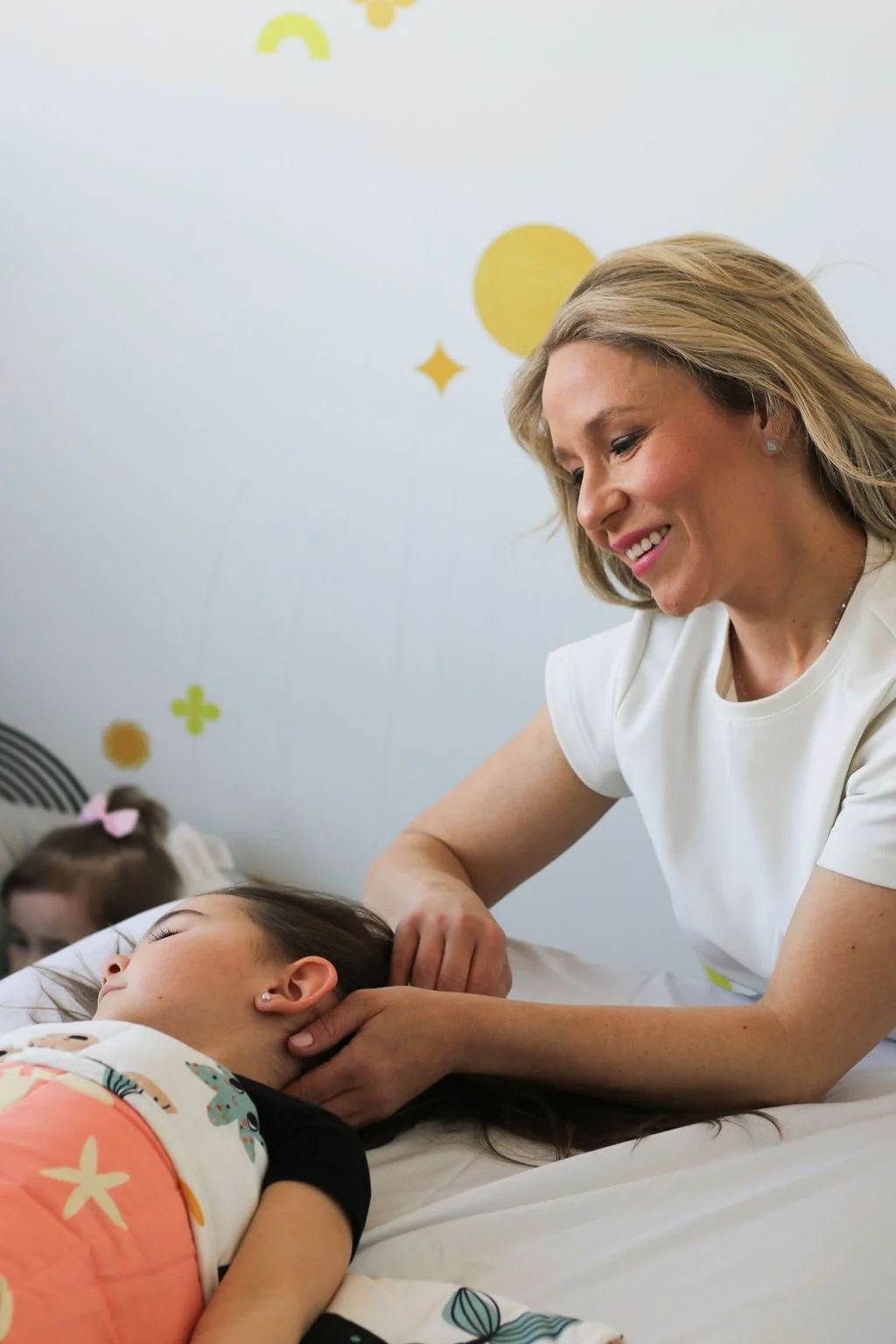
For some children, gentle hands-on care can be one helpful piece of the puzzle. Pediatric massage therapy may support relaxation, ease muscle tension, and give a child a calm, predictable space where their body can settle. Some children respond well to very light, slow touch and may even fall asleep during a session.
Craniosacral therapy (CST) is one gentle approach that can be included in a massage therapy session. It uses very light touch and is often well tolerated by children who are sensitive to pressure or sensory input. Some families find it calming, and it can be a good fit for kids who don't enjoy deeper or more active techniques.
It's worth being clear about what it is and isn't. CST is a complementary option, not a treatment for sleep disorders or any diagnosis, and it works best alongside other supports rather than in place of them. Research on CST is still limited, and every child responds differently. Our goal is always to choose approaches that suit your child's comfort, sensory profile, and needs.
What a Session Might Look Like
Our approach is trauma-informed and sensory-aware. Sessions move at your child's pace, with their comfort and consent guiding what we do. Children are never pressured to participate, and we adjust touch, environment, and session length to what feels safe for them. A session might include gentle massage, light-touch techniques, or simply time to rest, depending on the day.
Is This Right for Your Family?
If your child struggles with falling asleep, staying asleep, or getting restful sleep, a good first step is a conversation. You don't need a diagnosis to reach out. We can talk through what you're seeing at home, discuss whether massage therapy may be helpful, and point you toward other supports, including your child's medical team, if that makes sense.
Book an appointment or reach out to talk through whether this might be a good fit for your family.
Further Reading & Resources
Every child deserves rest, and every family deserves support.